
BlackREBranded
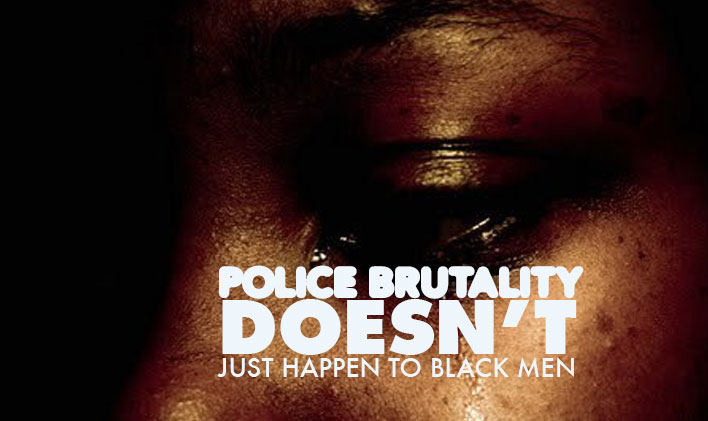
Police Brutality Doesn’t Just Happen To Black Men
By Jasmin Howard
“I can’t breathe!”
This phrase has become a recent sound bite of police brutality in America’s collective memory. It invokes the memory of the extrajudicial killing of Eric Garner by a New York City Police Department cop. The killing of Eric Garner has been broadcasted across the world and seen by millions of people. But fear of law enforcement in Black and Brown communities is nothing new.
In many communities, black and brown people are more likely to fear law enforcement than seek them out for protection or assistance. This phenomenon was explored in the recent twitter trending topic #icalledforhelp, where hundreds of twitter users expressed being traumatized even further after seeking help from the police. The aforementioned trending topic was predominated by the testimonies of Black women who were met with threats, charges, and even assaulted after coming in contact with law enforcement after trauma.
Although police brutality in the Black community is often portrayed as only affecting Black men and boys, Black women and girls are increasingly on the receiving end of violence by authority figures. This occurrence should not be a surprise due to the current trend of Black women being the fastest growing prison population in the United States. The lack of media exposure for the police-led violence against Black women and girls creates a false notion that Black women and girls are protected from the anti-Black violence that exists in the law enforcement agencies of this nation. Black women and girls are using social media, TV, and other outlets to dispel this false narrative, and trending topics such as #icalledforhelp, #fasttailedgirls, #mynypd bring awareness to the verbal threats, sexual and physical violence Black women and girls face from those who swore to serve and protect them.
Simply put, Black women’s femininity does not protect them from the dehumanization or criminalization of Black bodies. Within the last few months there has been three cases of Black women being assaulted by law enforcement that have received national attention. On May 20th, 2014 Professor Ersula Ore was initially cited for jaywalking by Arizona State University Police. A seemingly commonplace and minor offense ultimately led to Dr. Ore being body slammed by a police officer and charged with resisting arrest and a felony count of aggravated assault. On July 1st, 2014 a California Highway Patrol officer was filmed repeatedly beating an unarmed, great-grandmother, Marlene Pinnock, in the face. Recently New York City Police Department officers were taped dragging forty-eight year old, Denise Stewart, out of her apartment after allegedly police responded to the wrong apartment. Stewart, who had severe asthma, was left exposed and gasping for air in the hallway of her apartment. She uttered “oxygen, get my oxygen.”
Dr. Ore’s social status as a professor did not protect her. The motherhood of Marlene Pinnock did not protect her. And the health of Denise Stewart did not protect her from police brutality. Often times the privilege of protection that is often associated with femininity in this society, is not a benefit that Black women can acquire.Black women are not excluded from the suffocating nature of over-policing.The stifling nature of police surveillance and brutality leaves many Black and Brown people unable to breathe and truly live their lives without fear and unnecessary constraints.
At the end of the day, Black and Brown men and women alike, all just want to be able to breathe.