Entertainment
Clair Huxtable is Dead: On Slaying the Cosbys and Making Space for Liv, Analise, and Mary Jane
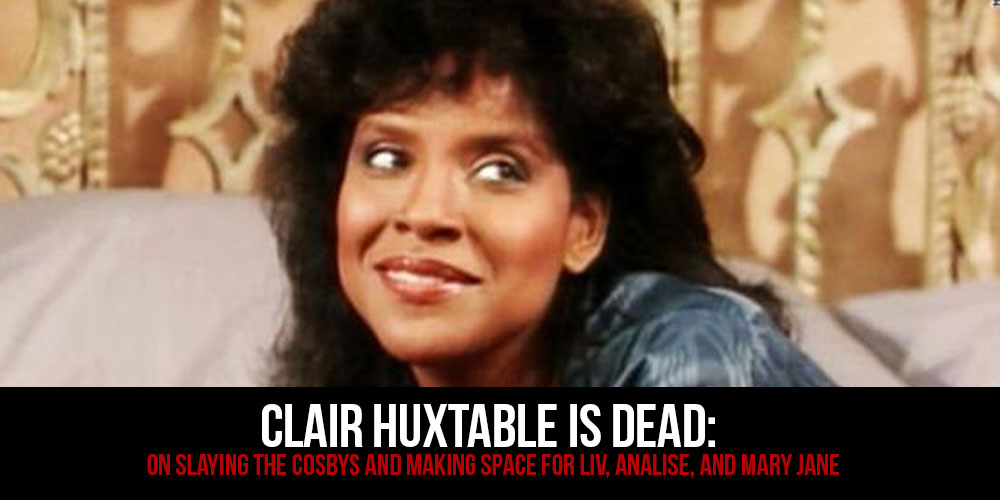
That Bill Cosby drugged and raped women for sport for many years is not new news. Apparently, the story has floated for years, and several months ago I read the testimony of two new women who had come forward, after the statute of limitations had run out, simply because they wanted to tell their story. Now that a Black male comedian Hannibal Burress has had the courage to take Cosby to task for his conservative, anti-poor, misogynist respectability rants, people are listening again. It sucks that folks only believe women were really raped when another man says he believes them, but this demonstrates the importance of male allies. Just last week my intro women’s and gender studies students and I talked about what it means for men to participate in ending rape.
But between the reports about Bill Cosby, rapist, and Stephen Collins, the actor from Seventh Heaven who admitted to being a pedophile, the lovable portraits of family that anchored my childhood in the 1990s are going up in smoke.
Perhaps that’s a good thing. For far too long, Black women in particular, have been saddled with the representational baggage of the Cosby Show. Even though Raven Symoné’s comments about her being “American” not “African” strike me as short-sighted and misguided, I understand her desire to move out from the shadow of the Cosbys.
I say that as an avid lover of the Cosby Show. Cliff Huxtable’s progressive gender politics and the show’s overt rhetoric of anti-sexism has struck me in my adult years as decidedly progressive for the time. But it’s a sham. How can a man who is a vicious hater of women get all the rhetoric right, offering up an idealistic view of what a “good, feminist family man,” might look like? It turns out that dudes, or their carefully crafted representatives, can sound right, and seem right, and still be all the way wrong. It turns out that you can have progressive feminist politics on the outside and still be deeply emotionally damaged and fucked up on the inside.
And since Bill Cosby is a rapist, his avatar Cliff Huxtable is a representational terrorist, holding us hostage to a Black family that never was. But let him die. Stockholm Syndrome be damned.
I’m reminded of a couple of moments that always struck me as creepy – after Denise got married, Cliff’s character felt compelled to have a conversation with Martin about whether she had been a virgin on their wedding night. Martin assured Cliff that she was “inexperienced.” And on another episode when Vanessa got caught sneaking out with her boyfriend, he used the infamous apple demonstration to ascertain whether or not they had had sex. I understand the parent of a teenager wanting to know for a variety of reasons about the level of sexual activity of their 16 year old, but he coulda kept the ocular demonstration. And the inquiry into his married daughter’s sex life was hella inappropriate, and perhaps offers us a clue into the mind of a sexual predator.
That obsession with Denise’s sexual practices was not unlike his row with Lisa Bonet in public after she, a grown woman, married Lenny Kravitz. It makes me think again about whether Bonet was the problem child she was made out to be, and makes me reconsider her choice not to participate back in 2002, in the 10 year Cosby Reunion special.
It has long been time to slay the Huxtable patriarch. So Cliff Huxtable, you’re dead to me! And perhaps now representations of Black families, and in particular, Black women can live and breathe on television.
The exposure of the utter fictiveness of the portrayal of Cliff Huxtable strikes me as really necessary in a moment, where because of Shonda Rhimes, Black women dominate the Cosby Show’s (and later A Different World’s) old primetime Thursday night slot. Rhimes brought Black Thursdays back.
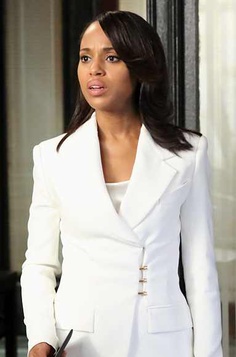
But these new representations of Black women labor under the old expectations. That’s a problem for a lot of folks, one that won’t be solved because neither Olivia Pope (Kerry Washington) nor Analise Keating (Viola Davis) aspires to Clair Huxtable status. That’s a good thing. A thing that those of us with all of our respectability feminism would do well to really grapple with.
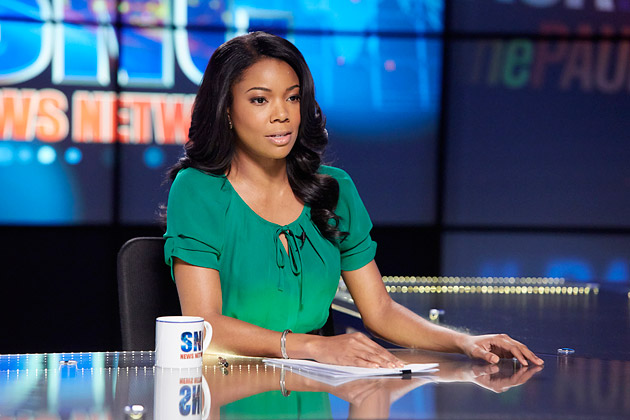
After last week’s explosive two episodes in which Olivia (and Smelly Mellie) managed to rescue the President’s daughter from a sexisode (#EiffelTower) without slut-shaming her, and Viola Davis took off her wig and dark, dark, beautiful, earth toned make-up on screen, everybody should be clear that Clair Huxtable is dead, too.
RIP RIP
(Can I just digress and say, “Aren’t y’all glad Liv is back to fixing shit? Stay doing that, Liv. Stay doing that and get you some homegirls and maybe a therapist, so you can get free of Fitz’s whack ass, and we’ll be alright. But keep the hot sex though. My Lorde, keep that.)
How meta does Shonda Rhimes have to get for us to see that she’s peeling back layers, forcing us to look in the mirror, offering Black women opportunities every week to deal with our own racial and sexual traumas at the hands of white patriarchs and white patriarchy? Black men have traditionally dealt with that trauma by aspiring to the level of power white men have. Black women have experienced so much of the trauma of white patriarchy in intimate space –though not only there–and it’s time we had an opportunity to work out that trauma in (representational) intimate space. For once it’s about us and our pain, and what “the man” has done to us, specifically. Would I have chosen Rhimes as my midwife through this moment? No. But she’s proving to be a far more savvy one that I initially thought.
That she weaved that scene through a grammar and a vocabulary (the taking off of wigs, smoothing back of hair, lotioning of skin, removal of foundation – before a fight) utterly familiar to Black women suggests that she does in fact see us, does know us, even if it is not how we want to be known.
We need new representations. And we are getting them. But somehow, our feminist analyses can’t seem to wholly catch up. Far too many folk with otherwise good politics and insightful thinking, circumscribe Olivia Pope to a mammy-jezebel-sapphire nexus that is both laughable (in its lack of rigor) and infuriating (in its prescriptiveness). Can a sister get it in on tv without y’all calling her a Jezebel? Did y’all know Mammies are utterly asexualized? And if a Black woman runs shit, but don’t take care of other people’s kids, why does that make her a mammy? If she was totally unloving and uncaring, we’d call her a bitch. But wait…ol girl at the New York Times was saying some shit about all Shonda’s angry women. So…
Where the hell does that leave us?
I mean on one hand Liv and Analise might be cautionary tales in what it means to fellate and romanticize white supremacist capitalist patriarchy on the regular . I know that’s what so many feminists want me to say. There I said it. On the other hand, they might be complicated, powerful women in love with complicated, powerful men. On this we probably gone have to fuck with the greys just a little bit.
Perhaps we needed to slay Clair Huxtable to find out. (I ain’t even into slaying the mother like that but Cliff Huxtable has got to die, and unless we can imagine some new possibilities for widowed Clair, I suspect she’ll just not be the same without him.)
Look, as someone who on some days aspires to have a partner and maybe a kid, I too wish for more opportunities to see bad-ass (cis and trans) Black women in both hetero and same-sex partnerships, that aren’t emotionally abusive and fucked up.
But I know far more professional sisters in “creative” configurations of relationships than ones in traditional hetero and homo-normative partnerships. It’s real in these streets.
Shit even our inability to cut Liv some slack for loving somebody toxic long after they have outlived their usefulness strikes me as deeply emotionally dishonest. I know I have been there in that place where the person I loved the most, knew the best, wasn’t good for my soul. I know what it’s like to try to imagine possibilities of relationships beyond the person that has moved you deepest. But maybe that’s my shit.
I own it. But I also maintain that it seems mad difficult for us to really grapple with what emotionally vulnerable Black womanhood looks like on television.
Liv, Analise, and Mary Jane are gonna force us to do it though. And it will take all three of them and then some to move us away from our finely cultivated worship of Clair Huxtable, the sister who had the man, the kids, the beautiful home, the bangin career, fun friends, and hot sex.
Part of the reason pop culture is so important is because it refuses in so many ways to give us characters that conform to the shape of our deepest political desires. In so doing, it forces us to grapple with what it means to want the things we want. It makes us imagine that we could (and perhaps should) want other, better things.
What I see when I look at Liv, when I look at Analise, when I look at Mary Jane — they have cultivated options for themselves. I don’t agree with all their choices, and I prolly would not run my relationships in the ways they do. But in the ways they seem to exist always adjacent to marriage, almost as the sandpaper rubbing away the façade, they teach us something.
Nah, I ain’t saying Black women are only the sandpaper smoothing the walls of other people’s marriages. I’m saying that just as sandpaper’s rawness and roughness is used to smooth surfaces, these sisters rub our romantic and intimate desires right up against the rough hewn nature of our most revered social and family structures, allowing us to see them more clearly. Meanwhile, they walk away with the bruises and scars to prove that those institutions are not as smooth and innocuous as they look from a distance.

So we could continue to read these sisters as failures of certain kinds of respectable representation, or we could take a different feminist move and imagine what kind of possibilities they open up. And maybe those possibilities are about what they break, and not what they build. Maybe those possibilities are about the graves they allow us to dig, the bodies they allows us to bury, the fertilizer for soil that those buried bodies become.
Perhaps their purpose is not so macabre as that. Like chocolate truffles, broken open, the goodness, the substance runs out of the center. But like good sex, it’s all impossible to enjoy without getting messy.
Maybe they simply inhabit every representation that we have been taught to fear, from the mammy to the Jezebel, to the overachieving black lady. And perhaps once we have confronted our ghosts, dealt with the things that haunt us about who we might get to be in America’s popular imagination, we can ease up and let these sisters live.